
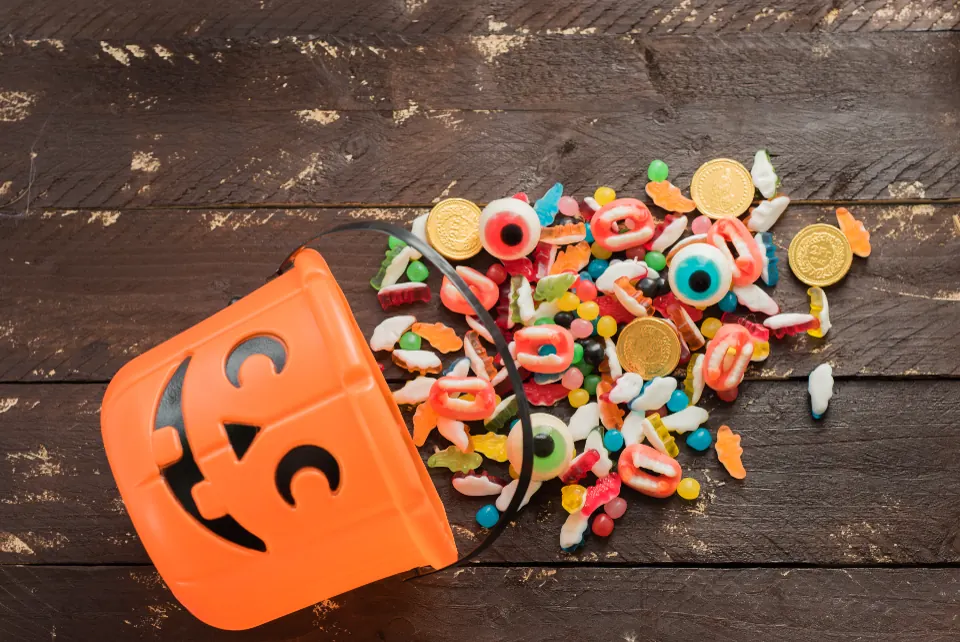
The National Retail Federation expects Americans to spend $13.5 billion on Halloween this year, up from $13.1 billion in 2025. Per person, the figure is $115.14, against $114.45 a year ago. The total is growing because 74% of consumers plan to celebrate, up from 73%, not because each shopper spends much more.
That matters if you want a bigger order value. A shopper's Halloween budget is nearly fixed, so the question is how much of it she spends with you. Four numbers from the survey show where to look.
49%: half of the shopping is already done
Forty-nine percent of consumers started before October. That is the same as last year and well above the 34% recorded in 2016. If your store looks quiet, the early half has probably bought somewhere else.
The other half is shopping now. Halloween falls on a Saturday, so a shopper ordering today has about two weeks. State the last order date for delivery on every product page and in the cart. An unclear date is a reason to leave.
47%: nearly half ask AI first
NRF found that 47% of consumers use AI tools for Halloween shopping. The top uses are brainstorming ideas (34%) and asking for product recommendations (32%).
A shopper who arrives from that conversation has a shortlist and a question the AI could not settle: does this costume run small, does the set include the wig, will the lights work outdoors? Our post on four October shoppers you will meet shows how their questions differ. Answer those on the product page, and have a person reachable when the page does not.
34%: a third want something they can reuse
When prices come in higher than expected, 34% of shoppers say they will look for items they can reuse or repurpose. 31% will comparison shop and 26% will look for coupons or sales.
For a store, reuse is an argument for the bigger basket. A costume piece that works again for a party, or decorations that last more than one year, justify a higher price at the product page. Say so there. Do not lead with a discount: it lowers the order and answers none of her questions.
13%: local stores keep a small, growing share
Thirteen percent shop at local and small businesses, up from 7% in 2016. Discount stores take 39%, specialty Halloween shops 32% and online stores 27%. A small store rarely wins on price. It can win on a person who knows the stock and the shopper's plan.
Before Saturday 31 October
Pick the three products people most often buy together, usually a costume, an accessory and a decoration. Check that each page names its last order date, its size or fit and what is in the box. Then offer live help on those pages for the final two weeks.
At the end of the season, compare the order value of the shoppers who asked a question with those who did not.
Source
National Retail Federation, "NRF Halloween survey shows consumer spending expected to reach $13.5 billion", press release of 22 September 2026 (Prosper Insights & Analytics survey of 7,889 US consumers, fielded 1 to 9 September 2026, margin of error plus or minus 1.1 points). The figures describe US consumers across all Halloween spending, not any one store. The reading of what they mean for order value, and the pre-31-October checklist, are an editorial application.